Sigh…rose oil smells so exquisite. Learn how to make DIY rose oil can and it will transform self-care into pure romance!
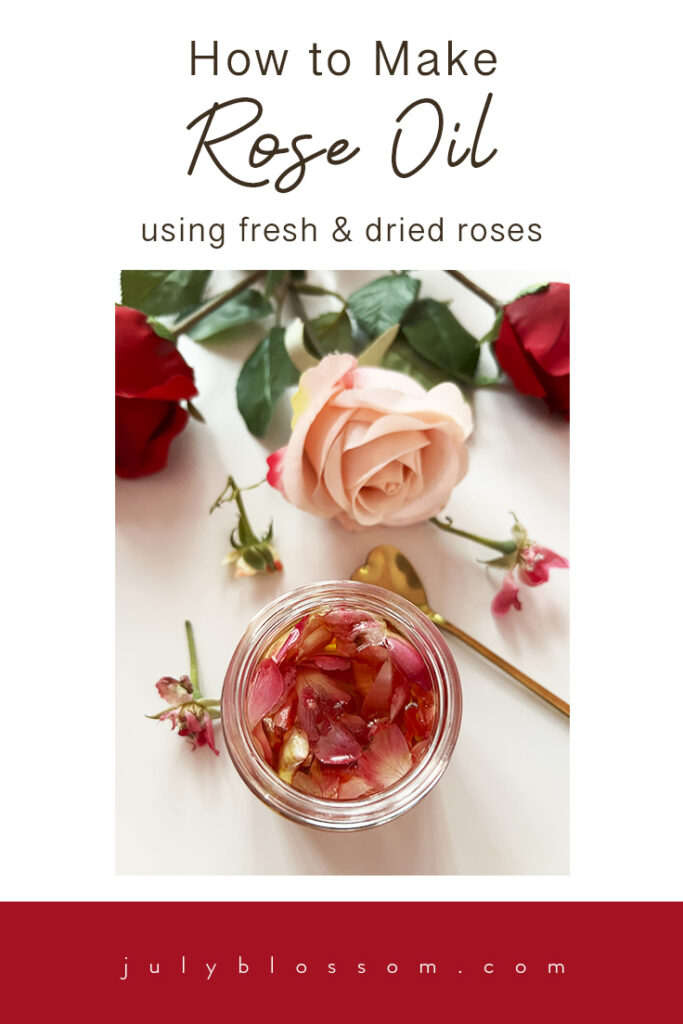
Roses have captivated the human heart for centuries, not just as symbols of love and beauty, but also as treasures of natural wellness. Their petals, whether freshly picked or carefully dried, hold aromatic compounds, vitamins, and antioxidants that can be infused into oil to create a versatile beauty remedy.
Making DIY rose oil at home is both a therapeutic ritual and a cost-effective way to enjoy the benefits of roses without relying on expensive store-bought products.
In this guide I’ll show you how to make rose oil using fresh roses and dried roses, along with the many benefits this elixir has to offer.
Why Make DIY Rose Oil at Home?
Commercial rose oil, especially pure rose essential oil, is one of the most expensive essential oils in the world. It takes thousands of petals to produce just a small vial.
However, by infusing roses into a carrier oil, you can capture much of their essence in a gentle, skin-safe way at home. DIY rose oil has several benefits including:
- Keeps harmful additives and chemicals away.
- You get to choose your favorite carrier oil (such as jojoba, almond, coconut, or grapeseed!).
- Creates a deeply nourishing oil that can be used for skin care, hair care, massages, and even aromatherapy.
- Connects you to a timeless practice of organic herbal wellness.
Choosing Fresh vs. Dried Roses
Both fresh and dried roses have unique advantages when it comes to making infused oil.
Fresh Roses offer vibrant fragrance and delicate compounds but may contain more water content, which can shorten shelf life if not dried properly before infusion.
Dried Roses have concentrated aroma and nutrients, longer shelf life, and less risk of mold during the infusion process.
For the best results, use organic, pesticide-free roses, as you don’t want chemicals seeping into your oil. If possible, pick roses from your own garden or buy food-grade dried rose petals.
How to Make DIY Rose Oil
Method 1: DIY Rose Oil with Fresh Roses
Ingredients
- 1 cup of fresh rose petals, preferably organic, washed, and gently patted dry
- 1 cup of carrier oil such as jojoba, almond, or fractionated coconut oil
- A clean glass jar with lid
Directions
- Prepare the Roses: Make sure your petals are free of moisture—any leftover water can cause mold. Lay them out for a few hours on a clean towel before use.
- Infuse in Oil: Place the petals in your glass jar and cover them completely with your chosen carrier oil.
- Warm Infusion: For quicker results, place the sealed jar in a warm, sunny spot for 1 to 2 weeks, gently shaking it every day to encourage infusion.
- Strain and Store: Once the petals have released their fragrance and nutrients into the oil, strain them out using a cheesecloth. Transfer the infused oil into a dark glass bottle for storage.
Tip: Fresh rose oil may be lighter in fragrance but wonderfully hydrating. Use within 3 to 4 months.
Method 2: DIY Rose Oil with Dried Roses
Ingredients
- ½ cup dried rose petals or buds
- 1 cup carrier oil such as grapeseed, olive, or almond oil
- Glass jar with lid
Directions
- Fill the Jar: Add dried petals to the jar, filling it halfway.
- Pour Oil: Cover petals completely with carrier oil.
- Slow Infusion: Seal the jar and leave it in a cool, dark place for 4 to 6 weeks. Shake occasionally.
- Strain and Bottle: Once the oil takes on a rosy scent and color, strain and transfer into a dark bottle.
Tip: Dried rose oil usually has a stronger aroma and lasts longer than fresh rose oil.
10 Lovely Benefits of Rose Oil
Rose oil is more than just a fragrant beauty product! It is a holistic elixir for the body, mind, and spirit.
1. Skin Benefits
- Moisturizing: Rose oil locks in hydration, making it ideal for dry and sensitive skin.
- Anti-Aging: Rich in antioxidants, it helps reduce fine lines, promotes collagen, and protects against environmental damage.
- Soothing: Calms redness, irritation, and acne due to its mild anti-inflammatory properties.
2. Hair Benefits
- Nourishes Scalp: Rose oil massaged into the scalp can stimulate circulation and strengthen hair follicles.
- Adds Shine: A few drops smoothed onto the ends tame frizz and add natural luster.
- Balances Oil Production: Helps regulate sebum, making it suitable for both dry and oily scalps.
- Hair Perfume: Rose oil makes your hair smell luxurious organically!
3. Aromatherapy & Emotional Wellness
- Mood Lifting: The gentle scent of roses is known to reduce stress, uplift the mood, and even ease symptoms of anxiety.
- Romantic & Sensual: Rose oil has historically been associated with love and intimacy, making it a perfect massage oil.
- Relaxing: A few drops in your bath or diffuser can create a calming spa-like experience.
Creative Uses of DIY Rose Oil
- Facial Serum: Mix rose oil with a few drops of vitamin E oil for a rejuvenating night serum.
- Massage Oil: Use directly or blend with lavender oil for relaxation.
- Bath Oil: Add a spoonful to your bathwater for a fragrant, moisturizing soak.
- Perfume Base: Apply lightly to pulse points for a natural, floral fragrance.
- Lip & Body Balm: Blend rose oil into shea butter or beeswax to create nourishing balms.
Storage Tips
- Always use sterilized glass jars and bottles to prevent contamination.
- Store rose oil in dark glass bottles to protect it from sunlight.
- Keep in a cool, dry place. Dried rose oil may last up to 1 year, while fresh rose oil is best used within 3 to 4 months.
Take Care
Making DIY rose oil at home is a rewarding practice that bridges nature, beauty, and self-care.
Whether you use fresh petals for a delicate, short-lived elixir or dried petals for a longer-lasting infusion, the result is a fragrant, nourishing oil that feels like bottled luxury.
With benefits ranging from glowing skin to emotional balance, DIY rose oil is a timeless remedy you’ll love adding to your daily rituals.
Caution: Please always do a patch test on your inner elbow to see that you are not allergic to DIY rose oil before you apply it to a larger area of your skin.
Are you going to make your very own DIY rose oil? Let me know how it goes in the comments below!


Leave a Reply