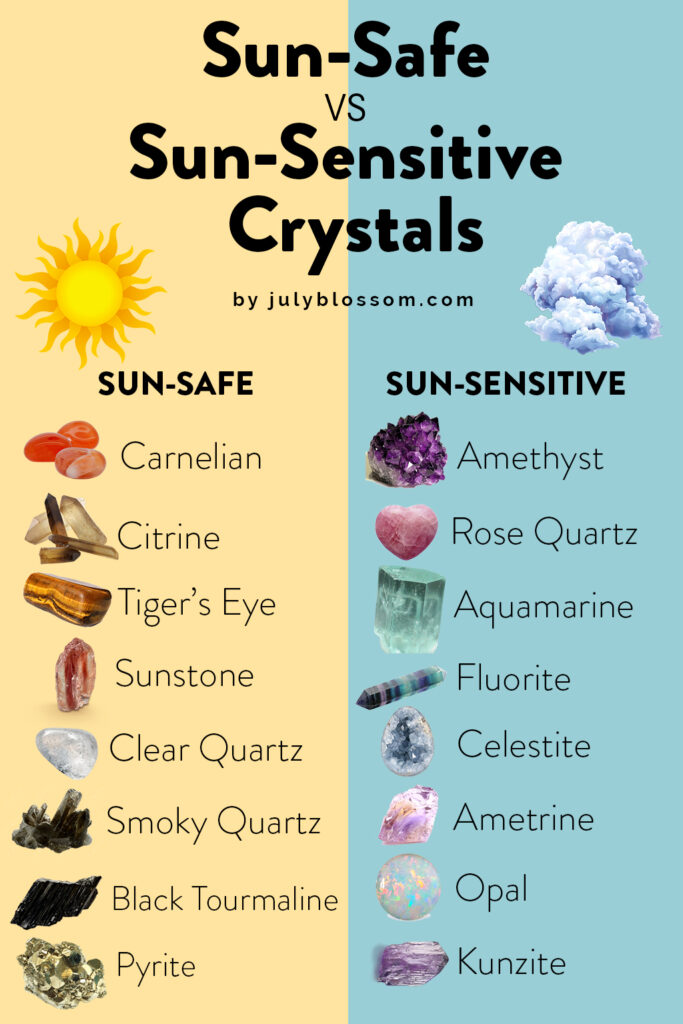
When it comes to caring for your stones, one of the most common questions is about crystals that can go in the sun and those that cannot.
Sunlight can be a beautiful way to cleanse and recharge crystals, but it’s not a one-size-fits-all solution.
Some stones thrive in the warmth of golden rays, becoming more vibrant and energized, while others fade, crack, or lose their unique sparkle if exposed too long.
This guide will help you easily tell the difference, so you can give each crystal the kind of care it needs to stay both beautiful and energetically powerful.
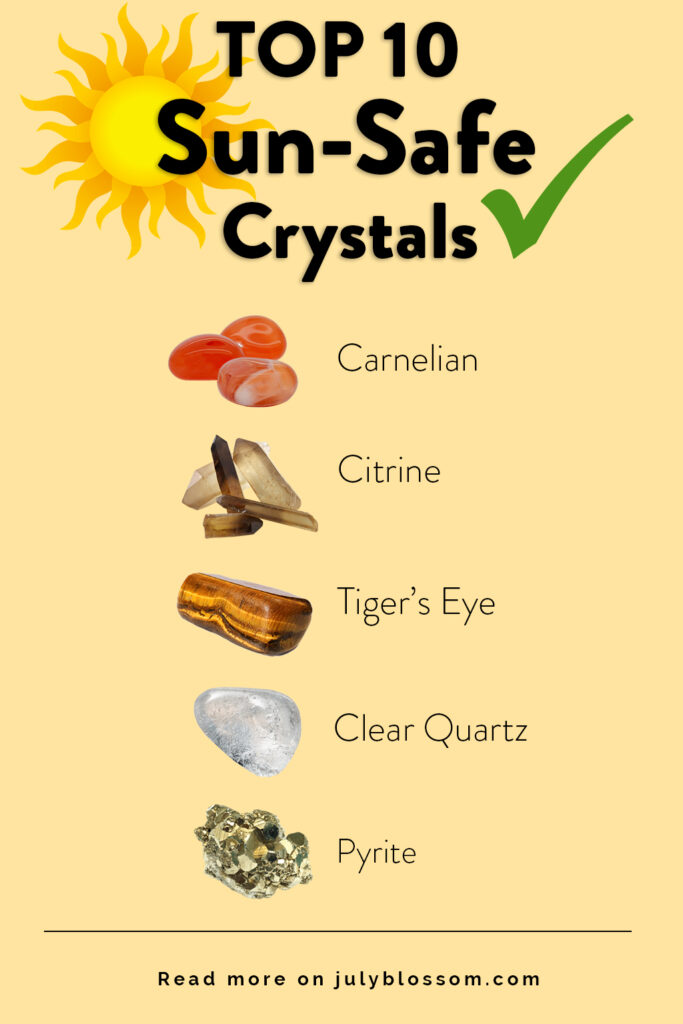
Top 15 Crystals that Can Go in the Sun
Some crystals totally love the sun! They soak up the rays like they’re on a beach vacay!
Tip: Even sun-safe crystals do best in gentle morning light to avoid heat stress.
1. Carnelian
Thrives in sunlight; boosts vitality, courage, and motivation.
2. Natural Citrine
Recharges abundance and joy; loves golden light.
3. Sunstone
Sparkles more in sun; amplifies positivity and confidence.
4. Tiger’s Eye
Stable and resilient; enhances focus and grounding.
5. Clear Quartz
Universal energy amplifier; safe for long sun exposure.
6. Smoky Quartz
Strengthens protection and grounding when sun-charged. Avoid very long exposure to direct strong sunshine.
7. Black Tourmaline
Grounds energy and shields negativity; sun-safe.
8. Hematite
Boosts stability, vitality, and grounding in sunlight.
9. Pyrite
Magnifies willpower, manifestation, and confidence.
10. Agate
Natural agate is sun-safe; dyed ones should not be placed in the sun since their artificial colors can fade. Sunlight refreshes its energy, boosts its grounding & stabilizing vibrations.
Other Crystals that Can Go in the Sun
- Lapis Lazuli
- Morganite
- Moonstone
- Amber
- Peridot
Top 10 Crystals that Should Avoid Sunlight
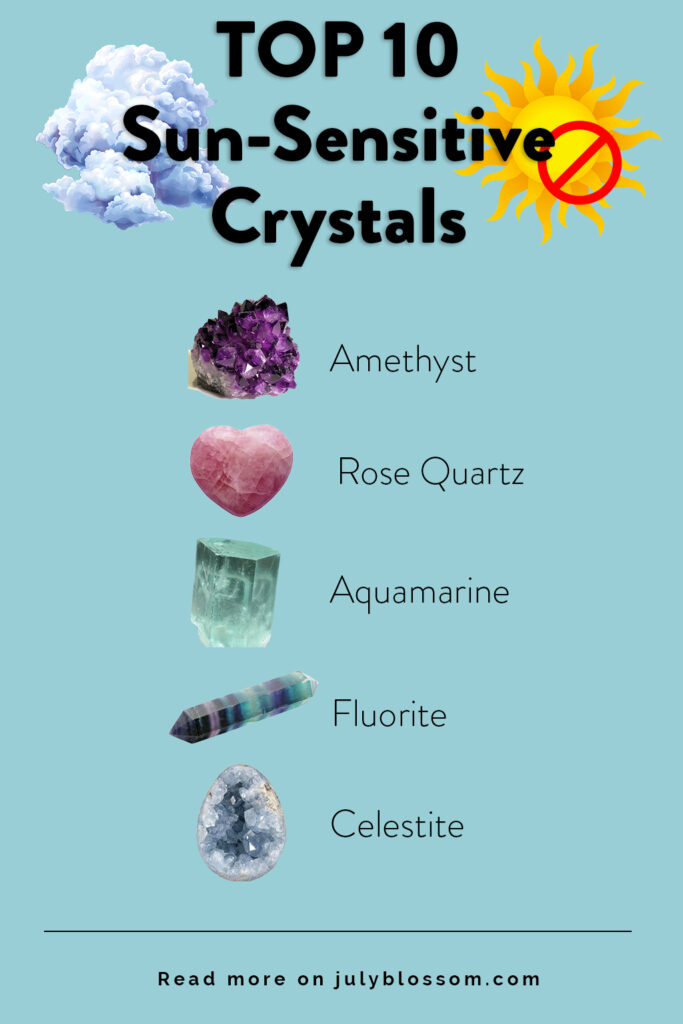
Other crystals are a little shy – too much sun and they start to lose their charm. Here are the top 10 crystals that cannot go in the sun!
1. Amethyst
Fades to pale lavender under UV rays.
2. Rose Quartz
Loses its soft pink color over time in sunlight.
3. Aquamarine
Blue tones fade, sometimes to near colorless.
4. Fluorite
Especially purple/blue types fade quickly.
5. Celestite
Becomes chalky and brittle in strong sun.
6. Ametrine
Distinct purple/gold zoning fades.
7. Opal
Risks drying, cracking, and losing play of color.
8. Kunzite
Extremely light-sensitive; pink fades rapidly.
9. Labradorite
Iridescent flash can dull.
10. Turquoise
Can dry out and weaken.
11. Green Aventurine
It’s green color comes from mineral inclusions, often fuchsite mica, which means very long exposure to direct harsh sunlight can cause fading over time.
Gentle Alternatives to Sunlight
If your crystal can’t handle the sun, don’t worry! There are plenty of other ways to cleanse and charge it.
- Moonlight: A safe, universal method, especially during a full moon.
- Earth Burial: Burying crystals overnight reconnects them with grounding earth energy.
- Crystal Charging: Place sensitive stones on selenite or clear quartz.
- Sound Cleansing: Use singing bowls, bells, or tuning forks. You can also use your own voice to chant affirmations to cleanse your crystals.
- Smoke: Pass crystals through incense, palo santo, or sage for a quick energetic reset.
- Herb Cleansing: Every herb has its own meanings such as lavender for peace, rose petals for love and rosemary for money. Place your crystals on a bed of herbs like rosemary, lavender, rose buds and more to charge and strengthen them. Amethyst can be placed on a bed of lavender, rose quartz on rose petals, green aventurine on rosemary, etc.
Thank you for reaching the end of this article, ‘Top 20+ Crystals that Can Go in the Sun and those that Cannot.’ Some crystals love basking in the sun for a boost of vibrant energy. Others need the gentleness of shade or moonlight to preserve their beauty and vibration. Knowing your stone’s preferences ensures it stays radiant and energetically powerful for years.


Leave a Reply